Showing posts with label Historical Fiction. Show all posts

Sunday, June 7, 2020

"The War that Saved my Life" by Kimberly Brudbaker Bradley

My family decided to read this together, and I was excited that for once I finished the book before we met!
Ada is a girl born with a club foot that has been abused by her mother her whole life. Right now it's WWII in London, but Ada doesn't know that because she is kept locked away from society. She crawls for most of her life, because it's less painful than putting weight on that bad foot. But she begins to walk, which is good for her because her younger brother is about to be sent to the country to avoid bombs being dropped on them and she wants to go with him. Her mom says she will never leave this house, even if there are bombs falling on them. But Ada can walk well enough that she escapes with Jamie (her brother). An older boy gives her a piggy back ride to the train that they are boarding. When they get to the countryside, Ada and Jamie are the last people to be picked. In fact, they aren't even picked. The woman in charge of the refugee children hunts down a woman named Susan to watch after them. Initially, she says she doesn't know what to do with children. But she turns it around and they learn a lot together. Ada gets stronger at walking, and begins riding Susan's horse named Butter. Then she makes friends with the daughter of the woman that brought her to Susan. She is a wealthy little girl, and has a lot of horses.
Whenever Susan does something nice for Ada and Jamie, Ada pulls away. She can't let herself get too comfortable, because this won't be permanent and soon she'll be sent back home and treated like less than human. Susan takes the kids to a pediatrician, and they find out that Ada can have surgery to make her club foot more manageable. It will never be totally fixed, but they can make it so she can walk much more easily. She just needs permission from her mother. They then have a big Christmas dinner with some of the soldiers from the air base nearby.
One day, someone comes and digs a bomb shelter for them. They need to put up blackout sheets in the house, and begin to stock up the bomb shelter. Ada sees a man row a boat to the shore and put a briefcase in the sand. Then he pushes the boat away and begins walking to town. She goes to tell the police, and they find the man and arrest him when they see that the hem of his pants are wet.
The Germans begin bombing the coast, and Ada has a panic attack when she needs to go to into the bomb shelter. It reminds her of the cupboard her mom made her go into when she misbehaved. Susan makes the bomb shelter more livable with herbs and candles to make it feel more homey.
One day, Ada comes home to find her mom at Susan's house. her mother takes her home without listening to Ada's protests, and throws away her new shoes and clothes. She tells Ada she can't use the toilet anymore, and that she will never leave her room again.
Her mom leaves, and they hear the bomb raid sirens. Her mom didn't give her any directions on what to do when a bomb raid happens, so she takes Jamie and leaves. They make it to a bomb shelter, but not before a bomb hits nearby. When they emerge from the rubble, they find Susan running toward them. She had realized that she wanted the kids to live with her, and takes them. When they make it back to the coast, they find out a bomb had fallen directly on her house. The air raid sirens hadn't gone off, so if Susan hadn't come to find the children she would have died. Thus, they had saved each other's lives.
THOUGHTS
I had never thought of someone being grateful for the destruction of WWII. Especially when it came to children- children's stories in regards to WWII are heartbreaking. But there may have been people in Europe that were in a bad situation, and the disruption was what they needed.
In Europe back then, people hid their children that had disabilities. It was a source of shame. It is just sad that she didn't need to be disabled, because even back then they had a corrective surgery.

Saturday, February 22, 2020

February 2020 Book Club- "The Secret Keeper" by Kate Morton

I just got this book on Tuesday, and started it on Thursday. I wanted to make sure it was done in time for Book Club on Monday, because I heard there was a major plot twist. And HOLY COW was that right!
The premise of the book is- A 16 year old girl witnesses her mom commit a murder. She never speaks of it for 50 years. 50 years later, her mom is dying and the family comes together. She finds out there was a mystery woman named Vivien in her mother (Dorothy, or Dolly)'s life when they lived in London, and that things were not as they appeared. She decides to get to the bottom of the mystery surrounding this murder. 

The thing this made me think of is the fact that we think we know our parents from before they were married and had children, but we never really do. Laurel (the one who was 16 when the murder happened) learns that the woman she thought was her mother really had a whole past. She was a survivor of the Blitz in London, and was the only one who survived out of her whole family. She went to the seaside to start a new life, and met her husband and had children. But her kids never thought of anything beyond the happiness they had in their home. They didn't know the skeletons in their mother's closet.
Ok WOW. So much to unpack. Dolly went to London to follow her boyfriend Jimmy, and became a maid for a woman who lived alone in her enormous house. She becomes obsessed with a woman that she works with in the volunteer service, who lives across the street from them. She believes that they are best friends, and that she will inherit the estate from this woman. When Vivien says she doesn't know her, and the old woman dies without giving her anything, she blames Vivien. Dolly is convinced that she is having an affair (Vivien is married to a famous author), and tells Jimmy they should blackmail her.

*SPOILERS AHEAD*
Jimmy begins to fall in love with Vivien. while pulling away from Dolly because of her obsession and cruelty in wanting to destroy Vivien's life. Vivien finds out about the plan, and decides to give Jimmy an enormous check to 1) insult him enough to keep him away (saving him from her husband who happens to be abusive), and 2) let him run away with Dolly like he wants because she is starting to love him.
Dolly's blackmail photograph accidentally gets mailed to Vivien's house, and her husband opens it. He tells her he already killed Jimmy, and that Dolly is next. She makes it to the house Dolly is staying at, and tells Dolly what is happening and that she needs to run away and LEAVE. Right when she says that, a bomb falls on the house. You find out that it was actually Dolly who died, and that Vivien put her ring on Dolly's finger and took her place. It was her escape from the abusive life she had lead.
So Laurel didn't know who her mom was AT ALL until just before her mom died. The regret Laurel thought her mom had over the blackmail was actually over the fact that Dolly wouldn't have been in the house if Vivien hadn't come to talk to her.
So when Henry Jenkins (her abusive former husband) came to find her that day, she knew that she needed to kill him because he would not stop until she was dead. She had escaped him for 20 years.

Sunday, February 2, 2020

"All the Light We Cannot See" by Anthony Doerr

I started this book when visiting in Dallas, and was instantly hooked. Alyse told me it was one of the best books she's ever read, which is saying something. If you haven't read it and want to, stop reading this and check it out immediately!
The first chapter is about the bombing of San Malo in France, and the main character is a blind girl who can hear and smell the bombs around her. Who wouldn't be hooked by that??
Doerr's style of writing was so fascinating. I love his descriptions. Part of it was so interesting because he was writing from the perspective of Marie Laure, the 16 year old girl who was blind. The other main character that they follow, Werner, is an 18 year old Nazi engineer who is a genius and taught himself to repair machines at a young age. So they both have unique outlooks. However, it jumping around from character to character, and time period to time period, made it confusing to watch.
It was difficult to follow the part of the story with the Flame of the Sea and Sergeant Major von Rumpel. The Flame of the Sea is a stone that has mythical properties. If you own it, you will have luck but everyone around you will start to die. Marie Laure's dad worked at a museum that allegedly had it. When they needed to leave Paris, her dad had a secret with him. She finds out he has a stone with him, either the real Flame or a copy. Nobody who took it knows if they have the real stone or the copy. The point is to keep it safe. Sergeant Major von Rumpel is on the hunt for the Flame, and tracks down one of the stones to Marie Laure. At this point she is living with her great uncle Etienne, a man who has been traumatized and isn't "quite right" after watching his brother die in WW1. Her dad was arrested and taken prisoner. Etienne's housekeeper died. So it was just them, until Etienne was found to be broadcasting rebel radio messages and was arrested. So Marie Laure is home alone, with the world falling apart around her. She can't get out, and she can't see what is happening.
Meanwhile, Werner was growing up in an orphanage in Germany with his younger sister Jutta. He is a boy with white hair and big ears, and taugt himself to put together a radio. Soon everyone was coming to him to repair their electronics. When he was older, some of the older boys started to get taken to be part of Hitler's youth. When Werner gets taken, he becomes friends with a boy named Frederick. They go to Frederick's house, and Werner sees what it is like to have wealth. After they return, a Polish prisoner is captured and brought to the camp. He's tied up in the snow. Every single one of the boys is supposed to throw a bucket of water in the man's face. But Frederick refuses multiple times. He then becomes the target of the wrath of the entire camp. he is eventually beat so badly that he is sent home, unable to do anything for himself. Jutta is so disappointed in Werner for how he is changing during this time that she refuses to send him new letters.
Werner becomes a radio tracker, and trains to find enemy armies. He is able to isolate signals to within a few yards. He's taken out on a tank with other soldiers. One of the other soldiers was probably the most crude person I could think of, and talked horribly about girls. Werner is haunted by a small girl and her mother, who are killed by the other men in his tank. At night, he will randomly hear a young girl reading "20,000 Leagues Under the Sea" over the radio. He knows this is illegal and could get her killed, but he doesn't say anything about it. They eventually make it to Sant Malo, and are there during the Blitz (the first chapter). Werner is trapped under a hotel with Volkheimer and some other men, and they try to get some radio frequencies. Suddenly, Werner hears the girl over the radio again. He's able to triangulate the sound to Etienne's house.
So HERE is where the stories merge.
Werner gets to the house to find Sergeant Major von Rumpel looking for Marie Laure. There is a brief struggle, and Werner kills von Rumpel. He's able to rescue Marie Laure and bring her to an Allied camp. While they only briefly met, they had a deep connection.
So, this is where the story SHOULD end. But I saw there were still hours left on the audiobook and I knew it wouldn't end this cleanly.
Jutta and the older girls in the orphanage run away with the nun, Frau Elena. They're hiding out and are found and raped by Russian troops.
Werner gets taken away to be a prisoner of war. He gets sick, probably from sitting in cold water for days after the hotel he was in collapsed. He runs away from the camp and- in the most shocking twist I've read in a while- steps on a landmine and dies.
Ok let's just talk about this. WHAT??? That's just how it ends for Werner??? It was heartbreaking to say the least. But I suppose that makes it more accurate. War doesn't just end badly for minor characters, and every soldier had a story like that.
30 years later, Volkheimer tracks down Jutta and gives her Werner's things. And even later, you see Marie Laure with her grandchildren.


This book was PHENOMENAL.

Monday, August 26, 2019

Book Club August 2019 book- "Where the Crawdads Sing" by Delia Owens

So my friend Susan started a book club here! I'm so happy about it, because it's giving me a chance to really kick up my reading.
The first book was "Where the Crawdads Sing" by Delia Owens. I have seen the picture on the library website, since it is popular. So I'm glad she picked it out!
The book opens up with a scene of a man's body being found in a swamp. They don't know who killed Chase Andrews, but they had some suspicions. 
The first half of the book were memories about a girl named Kya (born Catherine) who grew up in the swamps outside a tiny town in North Carolina. She is abandoned by her family at a very young age (like ages 6-8), but somehow has the drive to survive. She sells clams to a local store run by an old "colored" man named Jumper, and makes rudimentary food. CPS comes to bring her to school, but she gets made fun of so much that she only goes one day.
Her older brother, Jody, has a friend named Tate that recognizes Kya and helps her. She learns to read and write, and eventually falls in love with Tate (in a way). She has no way of knowing what human emotions are or how someone should act besides the animals that she has seen. Tate prevents anything from happening at the last minute, and eventually goes off to college.
Meanwhile, she meets Chase, who wants to spend time with her. He shows interest, and one day when Kya is in town she sees him with his arm around another girl. He blows her off, but comes back and apologizes. They eventually go on a trip together, where he takes her virginity and she does not like it. He gets engaged to another girl soon after, and Kya writes him off.
She had been documenting the animals that she has seen, and Tate finds a professor who publishes it. This gives her money that allows her to not only survive but begin to thrive for the first time in her life.
Shortly after this is when Chase's body is found, and Chase's mom is sure it was Kya. He wore a shell necklace that she gave him every day, even after he was married. However, Chase was the type of person who had multiple affairs and could have had many enemies. Ultimately, Kya was arrested and thrown in jail.
The next whole part of the book is the courtroom and trial. It was a big shift in narrative, losing all of her descriptions and talking about the nature around her. Instead it's very matter of fact and cold. It's obvious from the get-go that the prosecution was very biased against Kya. There was no real solid evidence against her. There were no fingerprints period, which was suspicious. But nothing to suspect her.
(SPOILERS AHEAD- if you haven't read it don't keep reading!)
Ultimately the jury did not convict her. However, Tate spent so much time and emotion invested in Kya's trial that he didn't notice his dad's failing health. His dad passed away shortly after. Kya and Tate got common-law married, but never were able to have children. They lived in her house in the swamp, and Kya died in her 60's, and while Tate was cleaning out her things he found out that she was also an accomplished poet. One of her poems talks about luring a man to his death, and pushing him off the tower into the swamp.


So, my thoughts on the book.
It showed how judgmental people can be in regards to "other" types of people. The prosecution had suspicions but they had many other people to look into. Why not the wife, since he has had many affairs? Why not the significant other of a woman that he had an affair with? But those were all "our" people in the town. Kya was an outsider and had been marginalized her whole life. She was an easy suspect.
It was fitting that she never got legally married. Why would she try to fit in with the government that had failed her this whole time?
It is sad that she wasn't able to have children. But since she found out her mom had a mental breakdown and left when she was 4, it makes me wonder if she would have handled having a child. Not having a nurturing presence in your life could have made it difficult to know how to raise a child. (I know it is possible, but she had a very feral childhood.)


Overall, a good read! Some of the descriptions are a little mature for younger audiences, but it was definitely engaging.

Monday, December 19, 2016

Book 32- Work and the Glory book 2 "Like a Fire is Burning" by Gerald N. Lund

I read this even faster than the first book. The Steed family lives in Kirtland Ohio, with the exception of Joshua. He is in Independence Missouri, where the Mormons have been having trouble with the local people. Some historical events that this book covers is Joseph Smith being tarred and feathered, and his son dying as a result; Zion's Camp coming out to Missouri and the miraculous way they were saved from the mob; the printing press being destroyed and the two little girls saving the Doctrine and Covenants; and the bishop being tarred and feathered. 
In the Steed family, Joshua marries a woman when he heard that Lydia married Nathan, but she can't keep a pregnancy. One night she refuses to help him cheat in a game of poker, and he beats her. She runs away and finds an LDS family, and joins the church. Joshua then divorces her, and chases she and their daughter out into the snow. Lydia is finally allowed to return home, and Nathan goes with Zion's Camp at the same time. When he returns Lydia asks him to come to Palmyra. Her parents are still very much against the church, and ask her to live with them again but they cannot talk about the church. When Nathan was with Zion's Camp, he sought out Joshua and was beaten badly by the mob. Melissa marries a non member man, who seems to be patient with the Mormon church initially. But he gets more and more impatient. 
The culminating event is the Kirtland temple dedication. What a time to be alive! That would have been amazing to witness. The one thing that really got me thinking was about Melissa and her non member husband. I know of families who have tension due to the same thing. I wonder how my marriage and our family would have been if we hadn't been a member of the same church. Would we be able to live in harmony?

Saturday, December 17, 2016

Book 31- "The Work and the Glory" Book 1- Pillar of Light by Gerald N. Lund

So, shockingly enough I never read these growing up. I remember watching Alyse read them many times over and I just never felt like it. But I wanted to read a book the other night so I picked it up and I LOVE it. I think I liked it this time because I read one of his other books which has a similar feel, but different time period.
The premise is a family of parents and 5 children who moves to Palmyra in the mid 1820's, and hears of Joseph Smith and his First Vision. The different members of the family respond in different ways. The oldest son Joshua and father are skeptical and ridicule anyone who tries to believe. The mother, who was raised religiously, takes a while but believes. The second son, Nathan, and oldest daughter Melissa believe and are baptized. The two youngest children are too young to be baptized at the time. Joshua begins to fall away from his family, in part due to his hardheadedness about the church. He moves out of the house, and continues trying to woo this girl Lydia. At the same time, she meets Nathan and eventually likes him better because he is a kinder person. Meanwhile, Lydia is skeptical of the church and even breaks off her engagement with Nathan when he says he will not renounce his beliefs. He sends her a Book of Mormon, and she reads it.
The book ends with Nathan joining the church for the organization of it on April 6, and coming home to find that Lydia decided to be baptized and even faced being ostracized from her family for it.


I really like the series of books that humanizes important people in history. It is interesting and sad to think of Joseph Smith being a kind man who just wanted to do what he was asked to do by God, because I know he is going to die in the course of the series. It is painful to read about the people surrounding Joseph Smith being so unkind, knowing that he is going to just get more of it for the rest of his life. It makes me think- if I was alive back then, would I be more of a Nathan or a Joshua?  Would I even bother to try to pray about it, or would I just brush it off as a crazy person talking? I don't know. I'd like to say I would be a Nathan and believe. But who knows. The rest of the books will be really great though!

Tuesday, April 12, 2016

Book 21- "Fishers of Men" by Gerald N. Lund

When I was younger, I used to read the "Tennis Shoes among the Nephites" book series. It's a series of like 10 or 11 books about some kids who found a wormhole into Book of Mormon times and went back and forth a few times throughout the years, then their kids found ANOTHER wormhole into Roman times in Jerusalem... and I lost track after that. They had a Roman soldier come back to modern times with them, and the son of Jacob the king of Jacobugath (that really wicked city in the Book of Mormon) come back with them. Anyway, it was a fascinating thing to read when I was in middle school and maybe even high school.
This book reminded me of that for some reason. While nobody time travels, it is a look into the lives of people who were living during Christ's time. It is the story of 3 groups of people- Miriam the daughter of a Sadducee, David and his Zealot family, and Marcus and Sextus the Romans. They all intersect at one point or another, but they have one thing in common- they have all heard of Jesus. Miriam and her servant saw Him when He was cleansing the temple, David's family knew Peter and Andrew and heard of Him that way, and the Romans heard of Him through Miriam. Throughout the book, the Zealot family was convinced of Jesus' power, and so was Miriam, but her father forbade her from seeing Him again.
Through the book all the groups become intertwined within a military attack that was orchestrated by Mordechai (Miriam's father). She ultimately saves the Zealot's lives by betraying the Romans, but at the cost of a few of them.
There was SO much in this book that I hardly began to scratch the surface. Especially with how they intersect. The Zealot family is almost brought into captivity by Marcus the Roman, then their son Simeon is almost killed by Sextus, then Miriam and Mordechai are saved by Simeon and his friends, then Marcus begins spending time with Marcus in the city, etc. etc. While that is very interesting, the best part is reading about the miracles of Jesus as if they are really happening now. At first I thought it was a little bit sacrilegious to be talking about Jesus like that. Him engaging in small talk and discussing things other than deep doctrine, However, He was a man. He had friends and He laughed with them I'm sure. He didn't just have to spend time ministering, So once I realized that, I really enjoyed this book. It ended a little after the miracle of the five loaves and 2 fishes, so I am anxious to see what happens next.


Friday, March 25, 2016

Book 19- "Gone with the Wind" by Margaret Mitchell

So this was classic number 9, and a part of the Modern Mrs. Darcy Reading Challenge! "A book that intimidates you". And really. any book that is 1,000 pages of small print is intimidating. But I got through it pretty quickly! I can tell when I really like a book because when I am done I feel kind of mopey. Like I don't want to start another book right away.
So, just to warn. I didn't know much of the plot when I started the book, so I don't want to give spoilers away. So if you don't know what happens stop reading!

I don't know how to attack the whole book, so I will just write based on the main points and characters.
Scarlett. That was a name I really liked for a girl. But after reading this, I'm glad we didn't pick it (it is still a really cute name, don't worry!) because she is so annoying! Through the whole book you wonder when she will get her act together and stop thinking only of herself and dumb Ashley (more on him later). She was a spoiled little girl at the beginning of the book, who couldn't shake her "love" to Ashley just because he was marrying someone else. She managed to alienate herself from everyone who loved and cared about her, and didn't seem to care about it until the last 10 pages of the book or so. But by then it was way too late. The only girl who would defend her died thinking they were friends (when she was just using her because she was Ashley's wife) and Scarlett realized that she did really care about her. Similarly, Rhett was patient and pursued her for years, only to get his heart broken again and again. She didn't care about her children, because they were just nuisances. She only treated people well when she wanted to manipulate them, and it never failed which just fueled her selfish desires.
She did go through a lot in the course of the book. 3 marriages (2 of which were for the wrong reasons), the Civil War, Reconstruction, nearly starving to death, General Sherman's "March to the Sea", keeping her family's plantation alive, and she did learn a lot. But she never lost her selfish stubborn streak where she only looked for what she could get, and ultimately that ruined her.
Rhett. I liked Rhett. He was the only man in the book who didn't care about propriety, and treated people the way they deserved to be treated. He was Scarlett's equal, and as he said in the end "they were meant for each other". He loved her so much, and followed her around for 12 years before leaving her in the end. He was an alluring character, because you knew there was always something under the surface. While he wasn't seen as a "gentleman" because of his bad conduct, he was the man that I could relate to the most. And while he was generally a selfish man and in it for himself he also was very generous with his money. He sponsored people in many ways, and when Scarlett's second husband and Ashley was in trouble with the Klan he stretched his neck to save them and many of the other people in the town.
It was so sad at the end of the book when his spirit was broken. He had hoped that his marriage to Scarlett would improve, but after her miscarriage and the death of their child he realized that it would never happen. He loved his daughter, and her death just about did him in. He ultimately just gave up, and his love for her died. And, when Scarlett asked what she would do with him gone he said his most famous line, "My dear, I don't..." you know how it ends.
These two had something great! Dang it, Scarlett. You're the worst.
Ashley. He is such a ninny. He wouldn't even be that big of a character, if Scarlett hadn't been so obsessed with him. He was ultimately saved by Rhett, even though he knew that would continue Scarlett's obsession. He doesn't even seem like that great of a guy. He is so philosophical and flighty that he should have never lasted in the post-war era. He wouldn't have, if it weren't for Scarlett. But his spirit was broken and he was resigned to the fact that his way of life was dead.
Melanie. She is the unsung hero of "Gone with the Wind". The entire book Scarlett treats her with contempt, and only puts up with her because she wants to stay close to Ashley. But she sees the good in everyone and everything, which makes her so great. She is the epitome of what a Southern lady should be, which is why she was so popular in the end and Scarlett was an outcast. She was frail and having her first baby almost killed her (it doesn't help that it was right when Sherman and his troops came and leveled the city), and having a miscarriage actually did kill her. But she was willing to stand and fight for the people she loved as long as she physically could.
The social culture. When I'm asked "what time period would you want to live in, if you had to choose?" I used to always say antebellum times. The clothes seem so exciting, and life was good in the South then. But I've realized it was only good for the rich white men. The first bit is Scarlett having to conform to the lady's proper "place" in a barbecue, where she couldn't eat. That is NOT something I want to be a part of! And the woman couldn't speak her mind. Women weren't supposed to learn math. They couldn't work in a business, unless they were "white trash" and couldn't be supported by their husband. Marriage was often done for convenience, and never for love. They were supposed to sit there and look pretty, and swoon and faint if something indelicate was discussed. And pregnancy was something to be ashamed of. When you were pregnant, you barely told anyone, and you hid it from the public. I can't imagine having to live like that! I would feel more like Scarlett than the rest of the women. Even after the Civil War was over, they tried so hard to keep their traditions alive that they fought the new trends.
Growing up we learned about the Civil War, but I don't feel like they described the destruction to the South enough to give it justice. Even in the best of circles, Georgia got destroyed. The wealthiest had to keep their dresses and mend them, and many people starved to death because they didn't know how to work. Or they were run out of town. One of the most intense scenes (which starts about 300 pages of intensity) was when Melanie had her baby just as the Yankee soldiers were coming to Atlanta. She was nearly dead from the struggle, and her baby just a few hours old when they had to leave town. Scarlett had to find Rhett to ask him to help them escape. Fortunately Rhett wasn't too much of a gentleman, because he had his horse stolen by the army. But he stole a horse and carriage back to help them get to Scarlett's home. They barely survived the 25 mile drive, and found that almost everyone's plantation was burned to the ground and leveled. Fortunately Tara was not, but it had been used as a Yankee headquarter. Now, when I heard about the Civil War, I don't remember hearing about this. I know that the war was the ultimate downfall of the south, and that it never really recovered to its full glory. But once the war was over it was not just over. There were thousands of people who lost loved ones and friends, and their homes and way of life. They needed to find a way to rebuild, and to do that without the slaves that they no longer had proved to be a great challenge. Essentially the only people who came out ok were people who got their money through illicit activities, like Rhett.
The racial tension. It made me so uncomfortable to read the racial slurs that many times. My 21st century ears (eyes) aren't used to that. And it was interesting to see the different side of what happened after the Emancipation Proclamation. Usually you just hear that the slaves were freed and it was great! AND IT WAS, just so nobody misreads me. I think slavery is completely morally wrong. For many of these people it was a better way of life than with a brutal slave owner. But it must have been difficult to be turned out of the style of life that you were used to, from zero freedom to total freedom. And many people did take advantage of that, which did not ease any tension between them and the white people in the south.


I seriously loved this book. I am just SO frustrated with how it ended. She should have ended up with Rhett. She realized it, but far too little too late. I would like to think that after this book ended, Scarlett did grow up a little bit and Rhett came back. Because 1,024 pages is way too many pages to invest in a relationship without something lasting coming out of it.

Monday, March 21, 2016

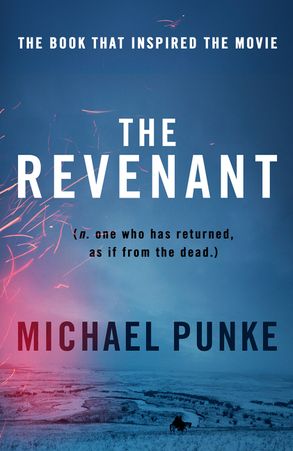
Book 18- "The Revenant" by Michael Punke

This was another book I had to finish before I go out to California, because I can't renew it again. It was a pretty quick read!
Like everyone else, I heard about this book after the movie came out, which is now famous for winning Leo DiCaprio his first Oscar. The movie is rated R, but it is based on a bear mauling so I decided to tread carefully. But besides the bloody description (and I'm sure horrific portrayal on the screen) of Leo's attack, it was a very clean book.
This is based on the legend of Hugh Glass, who a fur trapper that was attacked by a bear and left to die. His wounds were partially stitched up and taken care of, but he was essentially scalped and had his throat torn open so it didn't look good. He was robbed by the two men who were left behind to help bury him when he died, and he recovered by the sheer willpower and the desire for revenge. He crawled across hundreds of miles until he was strong enough to walk, and survived 2 attacks by the Native Americans. He somehow managed to catch up with his original fur trapping crew, but the man who was behind his being robbed had already deserted the crew. So he set off for them. Somehow Hugh outlasted 2 whole crews of men that went with him on different missions.
While this is obviously very much fictional, it is amazing to think that this was based on a real man who actually did survive a bear attack. He had no knife, no gun, nothing and he still made it. I won't say if he caught up with the man who robbed him (because that's his whole mission so you need to read it all!), but it is a thriller for sure.

Friday, March 18, 2016

Book 17- "Brooklyn" by Colm Toibin

So, I am working on "Gone with the Wind" (which is quite the undertaking) but I had this checked out and I saw that someone else wants it so I had to finish it before it was due. It is a book that a recent movie was based on, that was nominated for a few awards.
Eilis Lacey is a girl from Ireland. She lives with her mother and her sister Rose, and has been struggling to find work. Her dad has passed away, and her three brothers all moved to England to work. Eilis has struggled to find a job, and finally gets one that is far beneath her skill set. A priest comes and talks to her, saying he is from Brooklyn and that she should move there to have a better life. Her family helps her decide that she needs to go, and she sails across the ocean. She lives with a landlady and five other tenants, but struggles to find friends. She has a job, and enrolls in night classes to work on her bookkeeping so that she can become an accountant. She meets and falls in love with an Italian boy named Tony, and they were almost ready to get married when she finds out her sister died suddenly. She decides that she needs to go home to see her mother, and Tony says that he wants to marry her before she leaves so that she will come back. (First of all, kind of manipulative, right?) Then she goes back to Ireland and gets set up with a guy. As her time in Ireland runs short HE wants to marry her, so she is caught in a quandary. Does she go back to Brooklyn with her Italian husband, or does she stay with this other man that she has been spending time with?
So, I liked about 3/4 of this book. Until she cheated on her husband. I was already wondering what she was going to decide with going to Brooklyn or not, but it left a bad taste in my mouth that she was so spineless that she couldn't tell someone that she didn't even know that she had a boyfriend back in America, let alone that she was married. It would have been so easy.
So overall, a decent book. Besides that.

Sunday, February 28, 2016

Book 14- "11/22/63" by Stephen King

I don't know too much about Stephen King besides the fact that his books make really scary movies. I've seen "the Shining" (on TV, of course) when we were staying about a mile from the Stanley Hotel and it was CREEPY. Not to mention we toured the hotel the next day. But other than that, I've only read one of his books. And I don't plan on reading a whole lot more!
 But when I saw the preview for this being turned into a show on Hulu I thought I'd check it out. And King is the master of creating dread. He didn't even write anything too horrific, but I found myself being very jumpy reading it at night. It's the best kind of scared (when your husband is home).
Anyway, the story is about a high school English teacher in 2011 who also teaches GED classes. He reads one of his student's essays about how his father murdered his whole family with a sledgehammer and left him with a limp and brain damage, and he starts thinking about how life can change on a dime. At the same time, one of his friends, Al, turns up extremely sick within a day and tells Jake (main character) about a secret he has. Turns out the back of his diner is a portal to 11:58 AM on September 19, 1958. Every time. And when you come back only 2 minutes have passed in 2011, no matter how long you have been here. Jake realizes he can save his student's family from being killed, as Al says he wants him to live in 1958 and save Kennedy from assassination. Al believes this will stop RFK's assassination, which will prevent Martin Luther King's assassination, which will prevent the Vietnam War. The trick is that if he was successful, he could come back to 2011 but if he ever returned BACK to 1958 then he will reset what he has done. Al then dies from his lung cancer (that he developed in 1958-1963), and Jake decides to finish his mission. He takes on a new identity and Al's 1958 money and heads out. He moves to Derry Maine, then to Florida, then to New Orleans, then to Jodie Texas (outside of Dallas). He finds a community there that he can get involved in, and even falls in love. Meanwhile he is following Oswald using Al's notes, and winning money based on bets from sporting events (since he can't work too much without real credentials). At the same time, he is learning that perhaps each trip down the "rabbit hole" to 1958 isn't a TOTAL reset. He would see eerie coincidences between the towns he stayed in and the past and present, which will send chills up your spine.
The concept of the story circles around the "butterfly effect", where if a butterfly flaps its wings on one side of the world a hurricane happens on the other. You just don't know what reactions your actions will have. I won't say if he is successful in preventing Kennedy's assassination (because that's a huge suspense point in the book), but I will say that he learns about the consequences his actions take.

Monday, February 8, 2016

Book 7- "Schindler's List" by Thomas Keneally

This book was without a doubt one of the most gut-wrenching books I have ever read, only comparable to the books I have read about the African massacres and wars there. It was so hard to get through, but I knew that I needed to see how Schindler helped the Jewish people in the end.
One of the most interesting parts of this book is at the beginning, when the author says to not believe that Schindler was a hero, that he had his own flaws. He smoked and drank excessively, he was a member of the Nazi party to begin with, and had many affairs without even attempting to hide it from his wife. His wife (whom he never divorced) said that he had never been exceptional before the war, and was never exceptional afterwards. He was just lucky enough to have found his passion at the right time.
Oskar Schindler was a successful businessman who had ties to the higher-ups in the Nazi party when WWII started in Poland. He employed many Jewish people in his factories, which produced enamelware and ammunition. He was a man who knew how to get what he wanted, and was generous in his gifts to corruptible officials. He was a witness to the building of the ghetto in Cracow, and watched as it was emptied in a horrifically brutal manner with the inhabitants being taken to a concentration camp a few miles away. Out of all of the book, this part was the hardest to read. I even started reading a section and had to cover it with my hand because it was just too gruesome. Seeing this solidified Schindler's resolve to fight the Nazi system and to help as many Jewish people as he could. 
Schindler, at great cost to him (he was eventually ruined by this), kept his Jewish staff with him and even allowed them to live in a mini camp on factory grounds. He gave them much more substantial rations at his own personal cost, did not allow the SS guards inside his camp, and even had hygiene facilities. They were still worked hard in the factory, but they did not live in the same fear as the people in the other camp.
Eventually they closed down that camp and moved them to the extermination camps of Auschwitz and Grosse-Rose, but Schindler made a deal with the government that if he had a list of people who he needed for his factory, and if he moved his factory to a different part of the country, then those people would be saved. Overall about 1,200 names were put on the list. The men arrived within a week or so, but the women didn't arrive until Schindler came out to rescue them from Auschwitz himself.
Once the war was over, he and his wife had to become refugees. The Russians would shoot any German citizen on sight. But thanks to his life-giving efforts, he was protected by Jewish people all the way to South America, where he worked as a farmer before coming back to Germany. He was broke, and relied on the kindness of the Schindlerjuden, or Schindler's Jews, to survive. When he died, he was allowed to be buried in Jerusalem as per his last wish. It said he was mourned on every continent.


Ok, now that you have the synopsis of the story. This book was more eye opening to the horrors of the Holocaust than any other single book I have ever read. I know of the awful things that have happened in the extermination camps, but I had no idea just how terrible it was in the Polish ghettos. I also was ignorant of the fact that in a lot of the concentration camps, it was a labor camp. I don't know what I thought they did there from day to day, but building things did not cross my mind. It just boggles my mind that people could become so depraved that they literally do not see another human being as a human. If they did, they wouldn't shoot them on the spot or make them stand naked in the freezing cold or let them pass lice to each other or SO many other things I read. It is degrading. It is really amazing that people survived this, because I feel like if you were to break someone's spirit in that way it would be hard to bounce back from that. It is also awful to think that we had our own internment camps in the United States, with the Japanese. While they were not as awful, it is still something that the country should be ashamed of.
It is important that books like these are kept out in circulation, so that people read them in the future when there are no more alive that remember World War II. We need to remember just how terrible this time was so that it isn't repeated. I think of how some politicians have spoken of a registration system for the Muslims in the United States. That is how this started!
I will say this- I had always thought it would be a horrible but thought-provoking experience to go visit Auschwitz. Now I am not so sure if I could stomach it. It is one thing to read about the horrors that went on there. But it is another to see the places where it actually happened.

Sunday, December 25, 2011

"The Scarlet Pimpernel" by Baroness Orczy

I read "The Scarlet Pimpernel" by Baroness Orczy in a day. Less than 12 hours. It was SO good. I don't even know what to say about it... I had seen the play before and had heard the soundtrack thousands and thousands of times. The book was enough like the play that I could follow the plot somewhat, but it was different enough that I was entertained. Percy is a genius, and fools everybody with his attitude in the book. That's pretty much all I can say, it wasn't until the very end that I knew what was going to happen. I recommend it to everyone!