Sunday, February 28, 2016

Book 14- "11/22/63" by Stephen King

I don't know too much about Stephen King besides the fact that his books make really scary movies. I've seen "the Shining" (on TV, of course) when we were staying about a mile from the Stanley Hotel and it was CREEPY. Not to mention we toured the hotel the next day. But other than that, I've only read one of his books. And I don't plan on reading a whole lot more!
 But when I saw the preview for this being turned into a show on Hulu I thought I'd check it out. And King is the master of creating dread. He didn't even write anything too horrific, but I found myself being very jumpy reading it at night. It's the best kind of scared (when your husband is home).
Anyway, the story is about a high school English teacher in 2011 who also teaches GED classes. He reads one of his student's essays about how his father murdered his whole family with a sledgehammer and left him with a limp and brain damage, and he starts thinking about how life can change on a dime. At the same time, one of his friends, Al, turns up extremely sick within a day and tells Jake (main character) about a secret he has. Turns out the back of his diner is a portal to 11:58 AM on September 19, 1958. Every time. And when you come back only 2 minutes have passed in 2011, no matter how long you have been here. Jake realizes he can save his student's family from being killed, as Al says he wants him to live in 1958 and save Kennedy from assassination. Al believes this will stop RFK's assassination, which will prevent Martin Luther King's assassination, which will prevent the Vietnam War. The trick is that if he was successful, he could come back to 2011 but if he ever returned BACK to 1958 then he will reset what he has done. Al then dies from his lung cancer (that he developed in 1958-1963), and Jake decides to finish his mission. He takes on a new identity and Al's 1958 money and heads out. He moves to Derry Maine, then to Florida, then to New Orleans, then to Jodie Texas (outside of Dallas). He finds a community there that he can get involved in, and even falls in love. Meanwhile he is following Oswald using Al's notes, and winning money based on bets from sporting events (since he can't work too much without real credentials). At the same time, he is learning that perhaps each trip down the "rabbit hole" to 1958 isn't a TOTAL reset. He would see eerie coincidences between the towns he stayed in and the past and present, which will send chills up your spine.
The concept of the story circles around the "butterfly effect", where if a butterfly flaps its wings on one side of the world a hurricane happens on the other. You just don't know what reactions your actions will have. I won't say if he is successful in preventing Kennedy's assassination (because that's a huge suspense point in the book), but I will say that he learns about the consequences his actions take.

Thursday, February 25, 2016

Book 13- "Call of the Wild" by Jack London

Yep, another one today. When the book is 82 pages long (and I had just read the first half over Christmas break so I could skim that), you can read it really quickly! This is my seventh classic for the year, and it fulfills a Modern Mrs. Darcy Reading Challenge requirement- "A book that was previously banned". I had already had this book planned for this year, and when I was going down a list of banned classics I was amazed that basically all books on the list of classics have been protested or banned at some point. As a funny note, Fahrenheit 451 was censored at my rival middle school. So go Venado, for censoring a book about book censorship. 
Anyway, this book is DARK. It was censored because of its bloody and graphic nature. It is the story of a dog that was taken from his master's home in Santa Clarita California to satisfy a gardener's debt (even though it wasn't his dog to bet) and sent to Alaska to be a sled dog for the gold rush. He was beaten into submission and thrown into the dog-eat-dog world of sledding. If you showed a sign of weakness then you would be killed. So Buck became the most aggressive dog and became the alpha dog by killing his competition. He is eventually sold to a man named John Thornton, who was the first man out there to show him compassion. He becomes fiercely loyal to his owner, while battling the wild inside him. He will leave the camp from time to time to run with wolves or hunt, but he always returns. Once he spent 4 days hunting a moose, finally killing it. When he came back, he saw that the Yeehat tribe had come and killed all the men and their dogs, including his beloved owner John. He savagely kills the rest of the hunters from the tribe, and begins hunting with a pack of wolves. From then on he is known as an Evil Spirit among the Yeehat.
This book can easily be applied to men. There are the men who want to do their time and survive, and there are those who want to thrive and dominate. And you need people who are strong like that around you. Because when times get tough, as they were for Buck, you need those who can lead the pack.

Book 12- "Anne of Ingleside" by L.M. Montgomery

Classic #6!
This is the sixth book of the "Anne of Green Gables" series. It is written in a different style from how the other books are, in that 1) it is not written entirely from Anne's point of view and 2) it is a series of short stories told from each child's point of view.
At the end of the last book, Anne had just had her second child, Jem. He is the first one to live though, so he's the oldest in this book. At the beginning of this book, she's had 4 more children! Twin girls and 2 other boys. And, she shortly afterwards has another girl. I will say that it's really interesting how they don't even discuss pregnancy in this story. The author merely hints around it, and doesn't let Anne or Gilbert even tell the other children. I know that pregnancy wasn't celebrated as much back then, but it is interesting to "see".
Anne has some imaginative children (shocker, right?). I could see myself in Nan, one of her twin girls. She would always be caught up in a fantasy of her own, wandering through their yards pretending that she is someone else. I did that for YEARS, even in middle school when I would wonder what it would be like to be at Hogwarts. One time she got herself so worked up over a neighbor she had never even met that she was terrified when she actually had to go visit them. And the neighbor just turned out to be a nice old widow.
Overall, the children are normal kids learning about life at that time, even if they are a little bit spirited.
I felt like I related to Anne the most in this book, out of all of them. At the beginning of the book, Gilbert's Aunt Mary Maria came to visit for 2 weeks and ended up staying for months. She was overly critical, rude, and a martyr any time anyone would disagree. Towards the end of the visit, she was driving everyone crazy, even her nephew. But he was too loyal to turn her away, and it caused a little bit of a rift between him and Anne. Ultimately she got offended when people found out how old she was (through a huge surprise party that Anne threw) and left, but it was well overdue. I can't see someone in either of our families overstaying their welcome like that because they're more sensitive to our needs than that, but I could see Brandon not wanting to turn his own family out even if they were here too long.
At the end of the book, Anne was worried that Gilbert didn't love her anymore. He had barely noticed her, and wanted to go to dinner to see his old flame the night of their wedding anniversary. Not like I was worried about that, but it was nice to see that she was wrong and that he was just worried sick about a patient, and just overworked in general.

Tuesday, February 23, 2016

Book 11, "Anne's House of Dreams" by L.M. Montgomery

I am trying to power through as many books as I can this week, since I start my online Master's degree next week! That will seriously limit my reading time.
This is classic #5 for the year!
This is the 5th book in the Anne of Green Gables series, and while I enjoyed it  I think it was the saddest of the books so far.
It starts out very pleasantly, with Anne and Gilbert FINALLY getting married and moving across the island so that Gilbert could start his medical practice. They live in a little house with a few neighbors, that Anne automatically befriends (of course). However, there are a lot of struggles between the Blythes and their neighbors. Not that there was any animosity, but every character had their dark past. And it seemed like Anne and Gilbert had avoided many of those tragedies, until their first child died shortly after being born. That just ripped my heart right out. Just this week some people whom we love dearly lost their baby when he was born too early, and so this was especially tender for me. Then they had to deal with having to bury her (which in and of itself is a horrifying thought for a parent). Then the man that they became good friends with passed away right at the end of the book. However, he was over 75 years old and missed his sweetheart who was lost at sea over 50 years ago, so he was happy to go.
Thankfully, for my heart's sake, Anne and Gilbert had another baby before the book ended. Otherwise it would have cast too dark of a shadow over the book for me. But even with all that said and done, I still really enjoyed it. And I hope that the next few books live up to it as well!

Saturday, February 20, 2016

Book 10- "Phantom of the Opera" by Gaston Leroux

This not only fulfills my classic requirement, but it is a Modern Mrs. Darcy 2016 Reading Challenge book! "A book published before you were born". I mean, most good books were.
So I have Phantom on the brain right now. I and some girls around here are going to Miami to see it in a few weeks, and for some reason I hadn't thought of reading the book! So now between that, seeing the play, and listening to the music I am obsessed.
The author of the book writes it as if he is investigating the incidents of the Opera House, especially the time the chandelier came down. This made me wonder if it was based on myth so much that I asked Austin (our European official in the family), but he quickly squashed that.
But anyway, there is ONE glaring difference between this and the play. In the play, it is more of a romantic and exciting story (albeit the romance is lopsided) between the Phantom and Christine. Raoul seems to be a secondary character. And the Phantom seems to be a mysteriously handsome character beyond the mask. That's why I was explaining to Brandon that they didn't pick Gerard Butler for his operatic singing voice:
In the book, he looks like the living corpse. Even around his mask, he is terrifying. He has golden eyes that glow like fire in the dark, and he is only seen when he wants to be seen. He seems to be somewhere between the living and the dead. I think if they did that, it would lose a lot of the audience that is not as into the musical aspect.
But in the book, there is no budding romance between Christine and the Phantom. She seems to love him when she can only hear his voice, but as soon as she sees him she is terrified of him. She does not find his interest in her fascinating or mysterious. She does it because she pities him, and she is afraid of what will happen if she turns him down.
 Erik (because that's the Phantom's name? They have never mentioned it) is a mastermind of trap doors and torture, and he is a ventriloquist. Which explains many of his tricks. He also sang angelically, which drew people to his voice. He was shunned from society because of his looks, and so he eventually retreated into the cellars beneath the Opera House.
By the end of the book I felt badly for Erik. Yes, he is a psychopath and a murderer, but it makes you wonder what he would have been like if he hadn't been on the run all his life. He just wanted to love and to be loved, because not even his parents loved him.
One mystery is the mysterious figure in the book. He pops up a few times and the author makes a bigger deal out of it than it needed to be by saying the government said he couldn't discuss the figure. Who was it?!
I REALLY liked this book. I think they should do a version of the movie that is exactly like the book. It would make an excellent thriller. There was a scene I read where he follows Raoul home that gave me the chills. Raoul kept turning off his lamp and seeing these two golden eyes watching him. About 3 times he tried to scare off the eyes, but it didn't work. Why was that scene not in the play?! That is just great acting waiting to happen.

Wednesday, February 17, 2016

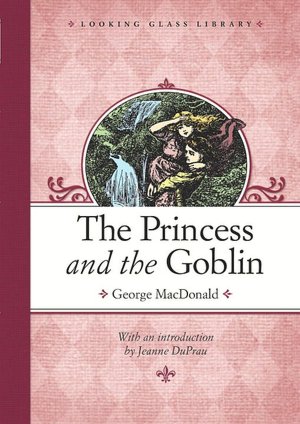
Book 9- "The Princess and the Goblin" by George MacDonald

So, when we were little kids we watched this movie about 300 times. It was THE, BEST. For some reason I just remembered it a few weeks ago, and so Brandon and I watched it one night while playing card games. Man, it was not good quality. We were just laughing the whole time at the poor animation (it was made in like the 80's or some time around then), and how the big strong main characters (back then) were really just 7 and 8 year olds. Good times!
I didn't know it was based on a book, so I checked it out from the library. I wish I would have read it before watching the movie! It followed the plot pretty closely, but is a little darker (as is to be expected with many European children's stories). And reading it made me realize just how funky of a plot it was. It would take too long to describe the whole thing. But it is only 250 pages, so a quick little read!

Monday, February 15, 2016

Book 8- "The Screwtape Letters and Screwtape Proposes a Toast" by C.S. Lewis

This book fulfills another book for the Modern Mrs. Darcy 2016 Reading Challenge! "A book you've been meaning to read".
I remember I started this book years and years ago (how sad is it that I can say that now...) and I really enjoyed it but I think I went back to school and forgot to bring it with me. Well, I just read it all the way through. It is a FASCINATING book. Lewis is a genius.
I read the letters from Lewis that was in the back of this book, before "Screwtape Proposes a Toast", which explained a lot of how I was feeling. It is so confusing to read the things that Screwtape describes as disgusting, horrible, etc. and realize he is talking about the good in the world. And to read him describing a person as idiotic, moronic, simple, and realize he is talking about God. And the things that he glorifies are the things that we shun in life. He discusses many different virtues and vices, and it is so believable to think that this is how the devil and his minions communicate about how to best tempt us.
They cover issues of "Love" vs lust, gluttony, satisfaction, charity vs unselfishness (Charity is the "bad" virtue, while Unselfishness is the "good" facade of an issue that really sews seeds of resentment), the social aspect of religion vs the spiritual aspect, repetitive prayers... they really covered everything. And the final battle was over making sure that Wormwood's client never felt like his prayers were being answered, and that he never felt that he could really endure to the end. As it were, the client was killed in an air raid (WWII), and when he saw Wormwood he immediately turned away and was welcomed into heaven. You've never wanted the main character (Wormwood, not the client) to fail so badly!

I recommend this to everyone. If you don't believe in Heaven or Hell, you will still find it an interesting take on the good and bad in the world. If you do, this will seem pretty real!